
You just had a root canal, and the pain is gone! Your tooth feels fine, so why does your dentist keep calling about a crown?
So when your dentist starts talking about a crown, it’s easy to wonder if it’s really necessary. The tooth is fixed, so why spend more time and money on something else?
A root canal doesn’t restore your tooth. It cleans and seals the inside. What’s left is a hollowed-out shell that still has to survive decades of chewing. At Valley Dental Health in Cockeysville, MD, Dr. Ashley Izadi and Dr. Roham Rafat see what happens when that shell isn’t protected. Too often, it’s a fractured tooth that can’t be saved.
Here’s why that happens, and what you can do about it.
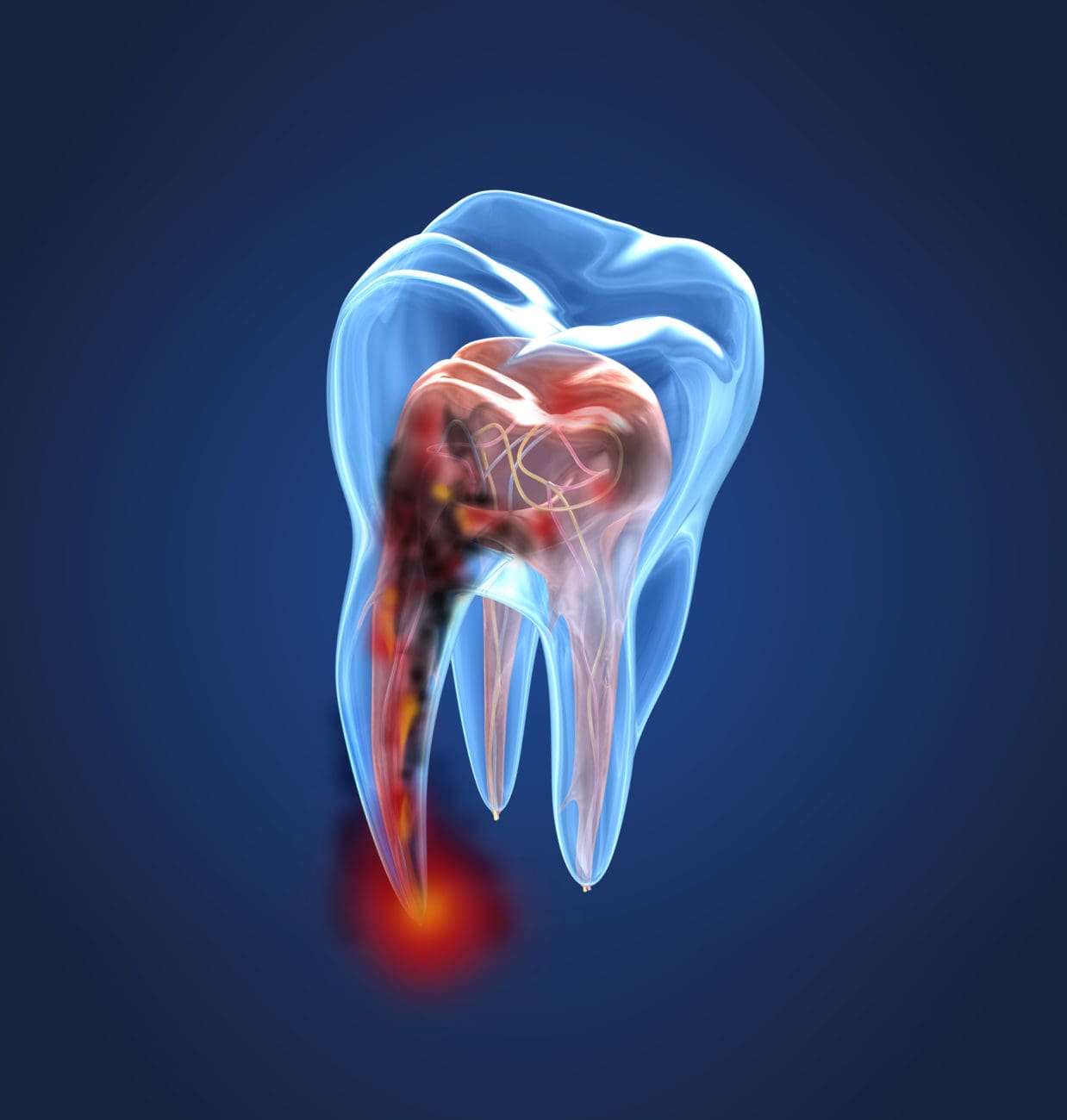
What a Root Canal Actually Does to Your Tooth
Think of your tooth like a tree. The outer layer is hard enamel. Underneath is dentin, which is softer but still strong. In the center is the pulp, which contains nerves and blood vessels.
When that pulp becomes infected, a root canal removes it. The dentist cleans, shapes, and seals the canals with a rubber-like material. The dentist then closes the access opening with a temporary or permanent filling.
The problem is that removing the pulp removes the blood supply. Your tooth doesn’t get moisture or nutrients from the inside anymore. It dries out and, over time, becomes less flexible and more brittle.
There’s also a structural issue. To reach the canals, the dentist has to create an opening through the top of the tooth. That opening disrupts the crown’s natural arch. The tooth loses some of the strength that held it together under pressure.
The result is a tooth that looks fine but has lost the resilience it used to have. It can handle normal function for a while. But without protection, it’s living on borrowed time.
What the Research Reveals About Unprotected Teeth
The data on this is sobering. A large study tracked over 1.4 million root canal-treated teeth. The ones that received a crown had a 95% survival rate at eight years. The ones that didn’t had a 60% survival rate at just two years.
That’s a stark difference. And it’s not because the root canals failed. It’s because the teeth fractured.
A 2019 study published in the Journal of Investigative and Clinical Dentistry found similar results. Teeth restored with crowns had a 92.2% survival rate. Teeth restored with fillings only had a 77.4% survival rate.
The pattern is consistent across the literature. Crowns protect, but fillings don’t. The clock starts ticking the moment your root canal is finished.
Why Timing Isn’t a Suggestion
You might assume you can wait a few months and get the crown later. The tooth may feel fine, but dentists push for a crown sooner rather than later for a reason.
Right after a root canal, your tooth is still structurally intact. The walls are there, and the shape is preserved. Placing a crown now means we’re covering a tooth that still has its natural form.
Wait too long and the situation changes. The temporary filling wears down. The tooth flexes under chewing forces. Tiny cracks form at the edges. Those cracks can spread into the root. Once a vertical root fracture occurs, you usually lose the tooth.
The average time between root canal and crown placement in clinical settings is around 60 days. But that’s an average, not a recommendation. Earlier is always better.
The Signs Your Tooth Is Already at Risk
Some patients wait because they don’t notice anything wrong, but warning signs can show your tooth is under stress. Signs include:
- You feel a sharp twinge when you bite down on that side
- The tooth feels sensitive to hot or cold
- The temporary filling feels loose or has worn down
- You notice a crack line or shadow on the tooth
- The tooth feels different when you tap it
Any of these signs means the tooth is already flexing. It needs protection now, not later.
Why an Unprotected Tooth Costs More in the End
Skipping the crown feels like saving money. It usually doesn’t work out that way.
If the tooth fractures, extraction becomes the only option. Replacing a single tooth with a dental implant costs several times more than a crown. A dental bridge requires crowning the adjacent teeth, which means destroying healthy enamel. Dentures are less expensive upfront but require ongoing maintenance and never feel the same as natural teeth.
Even if the tooth doesn’t fracture, a failing root canal can lead to a new infection. That might require retreatment, which is more complex than the original procedure. In some cases, the tooth still ends up being extracted.
A crown is the least expensive way to protect the investment you’ve already made in that tooth.
How Same-Day Crowns Solve the Timing Problem
One reason patients delay is convenience. Traditional crowns take two visits, and the wait between them can stretch to several weeks. That’s a long time for a fragile tooth to go unprotected.
Valley Dental Health offers a better option. Using CEREC technology, Dr. Izadi and Dr. Rafat can design, mill, and place your permanent crown in a single appointment.
You come in with a tooth that needs protection. You leave with a fully restored tooth. There’s no temporary crown to wear down, waiting period, and window for the tooth to fracture.
This is especially important for back teeth, where chewing forces are strongest. A molar that would have waited three weeks for a lab-made crown can now be protected the same day.
What to Expect at Valley Dental Health
If you’ve had a root canal and need a crown, here’s what happens at our Cockeysville office:
- Your Consultation: Dr. Izadi or Dr. Rafat will examine your tooth. We’ll take digital X-rays to check the root canal and the surrounding bone. We’ll evaluate your bite and how the tooth functions within your chewing system. You’ll get clear answers about your options.
- Crown Preparation and Placement: In many cases, we can prepare your tooth, design your crown, mill it in our office, and place it permanently in one visit. We’ll ensure a precise fit and a natural bite before we cement it in place.
- Follow-Up Care: We’ll check your crown at your regular cleanings. We’ll confirm it’s functioning properly and that your bite remains stable.
A Word About Dr. Izadi and Dr. Rafat
Dr. Izadi completed a two-year residency in Advanced General Dentistry at the University of Maryland, where she served as Chief Resident. She’s one of the few dentists in the Baltimore area qualified to offer sedation dentistry for patients who need it.
Dr. Rafat is dual-trained in periodontics and prosthodontics. That means he understands both the surgical and restorative sides of dental care. He’s a Diplomate of the American Academy of Periodontology and serves on the Dean’s Faculty at the University of Maryland.
Together, they bring a level of expertise that’s rare in the Hunt Valley area.
Schedule Your Crown Appointment
If you’ve had a root canal and haven’t had your crown placed yet, don’t wait. Every day your tooth goes unprotected is a day it could fracture.
Call Valley Dental Health at (443) 733-6613 or request an appointment online. Dr. Izadi, Dr. Rafat, and our team are ready to help you protect your smile.