
We’re doing a regular exam on a patient, and they seem genuinely surprised when we mention they have receding gums. Their response is almost always the same: “Really? But they don’t hurt at all.”
That’s the tricky thing about gum recession. It’s often painless. There’s no sharp twinge, no throbbing ache, no obvious red flag telling you something is wrong. You might notice your teeth look a little longer when you brush. Or maybe you feel a slight notch near the gumline when you run your tongue across a tooth. But pain? Usually not.
And that’s exactly why people ignore it until it becomes a bigger problem.
What Actually Happens When Gums Recede?
Your gums are designed to fit snugly around each tooth, like a turtleneck protecting the neck. That snug fit keeps bacteria out and holds your teeth stable. When gums recede, that protective layer pulls back, exposing the softer root surface underneath.
Unlike the hard enamel on the rest of your tooth, roots don’t have that same protection. They’re more vulnerable to decay, temperature sensitivity, and wear. The recession itself doesn’t hurt. But the problems that follow certainly can.
Why Do Gums Recede in the First Place?
There are a few common reasons, and some of them might surprise you:
- Brushing too hard: This is the big one. Many people think aggressive brushing equals cleaner teeth. The opposite is true. Scrubbing back and forth with a stiff brush wears down gum tissue over time. It’s like using sandpaper on a delicate surface; eventually, it erodes.
- Gum disease: Even without pain, you can have low-grade inflammation that weakens the attachment between your gums and teeth. Over time, that loosens things up and recession follows.
- Genetics and natural anatomy: Some people are just born with thinner, more fragile gum tissue. If your parents had receding gums, you have a decent chance of having them too.
- Teeth grinding or clenching: The constant pressure from grinding forces teeth to flex in their sockets, which can accelerate recession around certain teeth.
Why You Shouldn’t Wait for Pain to Show Up
Here’s where Dr. Rafat’s expertise comes in. As a prosthodontist with advanced training in periodontics, he sees the long-term consequences of untreated recession every week.
The longer recession goes unchecked, the more root surface gets exposed. That root is softer than enamel, so it wears down faster when you brush. It’s also more prone to cavities, and those cavities can be tricky to fill because they sit so close to the gumline.
Worse, if recession progresses too far, you can lose the bone support around your teeth. That’s not just an aesthetic issue. That’s a stability issue. Loose teeth, shifting teeth, and eventually, tooth loss.
What Can You Actually Do About It?
The right approach depends on what’s causing your recession and how far it has progressed:
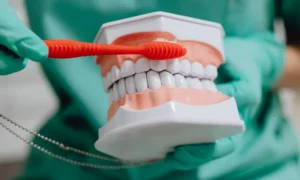
- If Caught Early: We can adjust your brushing technique, recommend a softer brush, and show you how to clean your teeth effectively without damaging your gums. Sometimes that’s all it takes.
- If There’s Gum Disease Present: We’ll do a deep cleaning to remove bacteria and give your gums a chance to heal and reattach.
- Recession is Moderate to Advanced: Dr. Rafat can perform a gum grafting procedure to restore lost tissue. It sounds more intense than it is. We use a small piece of tissue (often from the roof of your mouth) to cover the exposed root, protect it, and improve its appearance.
Improve Your Oral Health Today
Pain isn’t the only signal your body sends. Sometimes the warning signs are quiet: a little more tooth visible, a slight rough spot near the gumline, or just a feeling that something looks different.
If you’ve noticed your gums pulling back, even without pain, it’s worth talking with us. We can figure out what’s happening, why it’s happening, and what the best next step is for you.
Call Valley Dental Health today at 443-733-6613 or request an appointment online to visit Dr. Rafat. Let’s catch it early and keep your smile healthy for the long haul.