
Valley Dental Health provides dental fillings to repair decayed, worn-down, and damaged teeth. This restorative dental treatment will restore strength and beauty to your tooth and help protect it from future damage. Although many materials are available, our dentists prefer metal-free fillings for the most natural-looking results.
Tooth decay is preventable. There are several things you can do to prevent the need for a dental filling. Brushing and flossing daily, limiting your sweets, and visiting the dentist regularly are all ways to help prevent tooth decay.
Valley Dental Health is a great choice for a family and general dentist office near Hunt Valley, MD, and the surrounding areas. Our team is led by Dr. Ashley Izadi and Dr. Roham Rafat. Together, they have advanced dental training and can provide comprehensive care under one roof. We also provide cosmetic and general dentistry services to new and existing patients in Cockeysville, Sparks, Timonium, Phoenix, Lutherville, Hunt Valley, and nearby Baltimore neighborhoods.
Treating Tooth Pain And Toothaches
Tooth pain can affect your daily routine and often seems to occur at the most inconvenient time. A toothache can have a variety of causes. You can try at-home treatments such as warm rinses, external cold compresses, or a pain reliever to temporarily relieve the pain. Please do not try to use an oral pain reliever directly on the tooth or attempt to repair a loose filling.
You should call our office as soon as possible to schedule an appointment. At your dentist appointment, Dr. Izadi will examine your teeth and gums to locate the cause of the toothache. If tooth damage is present, he will recommend treatment to restore your oral health. Common causes of tooth pain include:
- Tooth cavity: Pain can be caused by an infection that has reached the tooth’s interior, known as the pulp.
- Tooth sensitivity: Patients with sensitive teeth may experience pain when consuming something hot or cold or when exposed to extreme temperatures.
- Teeth grinding: Bruxism can cause teeth to become sensitive or even damaged.
- Loose dental filling: Old fillings that have deteriorated over time can expose sensitive tissue, causing pain.
- Cracked tooth: Cracks in teeth are a breeding ground for tooth-eating bacteria.
Depending on the cause of your tooth pain, we may recommend a dental filling, root canal treatment, a mouthguard, or at-home dental products such as toothpaste for sensitive teeth. Restoring your oral health is important to prevent further damage or infection.
You can avoid a toothache with routine dental care. Regular visits to the family dentist’s office help us spot developing dental problems before they become painful problems.
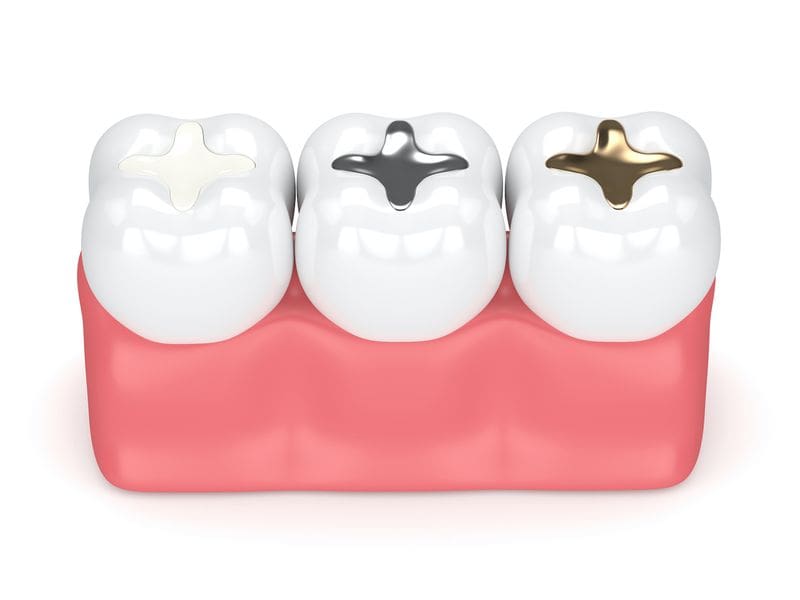
Types Of Dental Fillings
- Resin Dental Fillings: Resin dental fillings are “white fillings” that consist of biocompatible composite resin. Your dentist will apply it directly to the tooth and then cure it with a special light. We generally use them for minor problems and tooth decay. Your dentist will bond the resin material to a healthy tooth. They are long-lasting, but not permanent.
- Porcelain Dental Fillings: Other common names for these fillings include inlays, onlays, and partial crowns. They are for patients with more significant damage or decay because they add additional strength to the tooth. With proper care and maintenance, porcelain fillings can last many years.
- Amalgam Dental Fillings: Amalgam dental fillings are also known as “silver fillings”. These are very safe and effective. We use silver fillings on back teeth because they can withstand significant force. Silver fillings are durable and long-lasting, though many patients opt to replace them with metal-free restorations as part of a smile makeover.
- Gold Inlay Fillings: Other common names for gold fillings are inlays or onlays. They are made of an alloy of gold, copper, and other metals. Gold fillings are very comfortable and are the longest-lasting dental filling.
Patient Review
Dental Fillings FAQs
How Does the Dentist Choose the Material for a Filling?
There are multiple materials to choose from when getting a dental filling. The price of each varies depending on the material used. Composite fillings have become increasingly popular. Composite fillings are cured with UV light, so they tend to cause less pain than metal fillings. They are also made to match individuals’ tooth colors.
How Long Will My Filling Last?
On average, dental fillings last anywhere between 5 and 15 years. You can extend the lifespan by flossing and brushing your teeth twice daily, scheduling regular dental visits, and cleanings. The best thing patients can do to help their fillings last longer before needing replacement is practice good oral care. This will also ensure your long-term dental health.
Will I Be in Pain After a Dental Filling?
Patients commonly report some pain and sensitivity for 2-3 days after getting a dental filling. They are usually told to eat soft or cold items after the filling. Patients are likely going to be most sensitive to cold food and drinks, so keep this in mind when choosing food after getting a filling.
Can you eat after a cavity filling?
After a cavity filling, patients should wait at least an hour before eating anything. Fillings harden under UV light, but it is still a good idea to wait and let them settle before eating.
How long does it take to recover from a cavity filling?
On average, it takes two to four weeks to fully recover from a filling. After two weeks, the sensitivity should begin to subside, but if it persists for more than four weeks, schedule an appointment with your dentist.
Don’t Let a Toothache Wait
If you are dealing with tooth pain, a worn-down filling, or have just noticed a spot that doesn’t look right, we are here to help. Valley Dental Health offers gentle, metal-free fillings that restore your tooth and blend in with your natural smile. We are conveniently located to serve patients from Timonium, Sparks, Cockeysville, Jacksonville, Phoenix, and all surrounding areas.
Dr. Izadi and Dr. Rafat take the time to diagnose the real cause of your discomfort and recommend treatment that fits your needs. Call our Cockeysville office today at 443-733-6613 or request an appointment online anytime. We will get you comfortable and back to your day.